

Soil heavy metal pollution concentrated multiple "cancer village"
Release time:
2010-10-14 17:44
Land pollution, especially heavy metal pollution, brings major hidden dangers to people's lives, that is, life safety is challenged, occupational diseases are high, the mortality rate has risen sharply, and the age of death is generally advanced to about 45 years old.
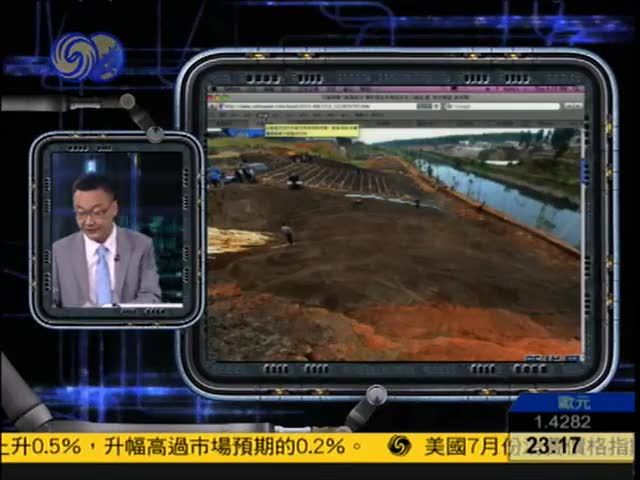
Yunnan cancer village youngest dead 9-year-old chemical plant lost money
At the same time, due to the lack of corresponding treatment mechanism, improper response may cause public health incidents or mass incidents at any time, so we must be vigilant.
Many "cancer villages"
Zhang Jianxin, director of the Basic Scientific Research Department of the Hunan Provincial Institute of Land and Resources Planning, said that after investigating the 25-year health records of 70000 people, they found that from 1965 to 2005, the number of bone cancer and bone pain patients showed an upward trend. In Zhuzhou, the hardest hit area of heavy metal pollution, the cadmium content in the blood and urine of local people is 2 to 5 times that of normal people.
The Hetao area of Inner Mongolia due to land pollution groundwater quality is poor, resulting in arsenic poisoning, fluorosis and other endemic diseases are more serious.
Nearly 300000 people in the Hetao area are threatened by arsenic poisoning, with more than 2000 people suffering from the disease. Yangjia pimple Village, Wuyuan County, Bayannaoer League is a key area of arsenic poisoning. There are many patients and many deaths in this village, mainly cancer. Most of them died of illness in their prime.
Villager Liu Xi reported to the reporter of "Economic Information Daily" that the married wife developed arsenic poisoning three years later, and there were more and more bachelors in the village.
The area from Dongjiaying in Hohhot and Linger County to Yongshengyu Township in Tuoketuo County is the key area of fluorosis, and the fluoride content of groundwater is the highest in Hetao area. The villagers of several key villages in this area have different degrees of fluorosis symptoms.
Reporters see, many villagers teeth black, loose, osteoporosis. Some villagers here drink local water and buy mineral water for their children's health.
The village of Dailahai, which is about 2,000 meters west of the tailings dam of Baotou Steel, is seriously harmed by the pollution of groundwater and rare earth elements, fluorine and other heavy metal elements in grain due to the infiltration of tailings water. There are many strange diseases, mainly cardiovascular disease, cancer, and osteoporosis. The reporter saw a little girl who was nearly ten years old and did not grow a tooth.
In the area of Huludao, Jinzhou, Liaoning Province, the land is mainly affected by zinc plant pollution, and the pollution elements are mainly cadmium, lead and zinc. Such elements attack the kidneys and bones, causing osteoporosis. In Japan, this is called "bone pain disease", is a relatively common occupational disease.
A reporter from "Economic Information Daily" came to the bazaar community of the Landlord Sub-district Office of Longgang District, which is located opposite the main factory area of the Huludao Zinc Factory. Huo Chunhua, secretary and director of the community, said that the zinc factory was built in 1937 and the people here were seriously injured. Whenever the zinc factory row "blue smoke", people can not breathe, cough.
The biggest impact is that there are more people with cancer here, more young people die, and more single-parent families. The community died 14 people last year, of which 6 died of cancer; 5 people died from January to May this year, of which 2 died of cancer. The youngest fatalities were all in their forties and sixties.
We are used to pollution"
A reporter from the Economic Information Daily conducted a survey in areas with high incidence of occupational diseases in land pollution zones in Inner Mongolia, Liaoning, and Hunan, and found that most local governments knew little about the incidence of the disease, and even if they knew it, they were "indifferent". The sick people are also used to this, reflecting that after many times there is no following, that is, one day after another, there is no way to complain.
Yang Sanmin, a villager in Yangjialecuan Village, Wuyuan County, Bayannaoer League, Inner Mongolia, said that although many people are talking about it now, people have eaten pigs fed on heavy metal-contaminated feed and vegetables grown in heavy metal-contaminated soil. And grain, some people even drink groundwater contaminated by heavy metals and will definitely get sick.
Yang Sanmin is worried about this, but he doesn't know how harmful the pollution is, because the naked eye can't see it can cause immediate problems. He did not want to tell the world about their village, fearing that it would cause outsiders to fear the village.
Gao Xiufeng, a 46-year-old worker at the Huludao Zinc Plant in Liaoning Province, died of liver cancer on February 2 this year. His wife Liu Fengxia said, "We are used to the pollution of the zinc plant. When nuclear radiation occurs in Japan, we are not afraid at all. The radiation here is much more severe than that in Japan."
Huo Chunhua, director of the bazaar community in Longgang District, where Liu Fengxia is located, said that since 2003, the zinc factory has promised to compensate the residents of the community, but the community has never received the money. Local deputies to the National people's Congress have repeatedly called for the overall relocation of the residents here, but the government said there was nothing it could do and everyone was numb.
According to Shao Hongchen, director of the Beigang Office in Longgang District, the office has a population of 14000 people, including 10000 farmers, with a total of 21000 mu. It has jurisdiction over 6 administrative villages, of which 4 villages have a linear distance of 2 to 3 kilometers from the zinc plant. The weather is always gray in winter.
The local Daochi village has a population of more than 5000, 10000 mu of land, and 4500 mu of land affected by the zinc plant. When the land is most polluted, the corn does not stick, the yield is reduced or even lost, and the majority of people suffer from cancer or bronchial diseases. Last year, the zinc factory allocated 91000 yuan as economic compensation. This year, it decided to allocate 105000 yuan as compensation. In fact, there was not much money allocated to everyone.
"Land Pollution Belt" Disease Prevention and Control Difficulty
The reporter's investigation learned that in addition to Yunnan and Guangxi, there are also major heavy metal producing areas such as Hunan, Sichuan, and Guizhou. Many mining areas have formed increasingly spreading heavy metal contaminated land.
The Ministry of Land and Resources has publicly stated that 12 million tons of grain in China are polluted by heavy metals every year, and the direct economic loss exceeds 20 billion yuan.
And this food is enough to feed more than 4000 million people a year. Similarly, if this food enters the market, the consequences will be disastrous. Occupational diseases and severe diseases in land pollution zones are showing a high incidence and expanding trend, and are facing extremely arduous prevention and control tasks.
Wang Xikuan, a senior engineer at the Geological Survey Institute of Inner Mongolia Autonomous region, said anxiously that although the relevant state departments attach great importance to the investigation of land pollution, because it is not an "obvious" big problem, it is difficult for the local government to pay attention to the results of the investigation.
For example, their investigation found that the fluorine content in the diamine fertilizer is high. In the reality of the high fluorine content in the Hetao area, the use of high fluorine diamine fertilizer has the harm of increasing the fluorine content in the soil and grain. Therefore, the staff have repeatedly suggested that relevant departments should produce low-fluorine fertilizers and guide farmers to use them, but almost no one has adopted this suggestion.
In view of the harm of land pollution to human health, Wang Xikuan suggested that a database should be established as soon as possible, and a database of arsenic disease and fluorosis should be established in different regions, that is, electronic files, including arsenic and fluorine content in water, exposure time, degree of disease, etc. It is also necessary to strengthen the monitoring of water and soil environment in key sections. In addition, efforts to improve water and divert water will be strengthened.
Recommend News
Email:zyxahh@163.com
Longbei Village, Tongde Community, Baolong Street, Longgang District, Shenzhen
Floor 1, Floor 2 and Floor 3, Building A, No. 86 Industrial Zone Road

Follow us